The Industrial Standards of Wholesale Harnais Pour Chien En Cuir
An in-depth whitepaper on sourcing, manufacturing pipelines, material selections, and ergonomics of premium leather dog harnesses for B2B procurement officers.
The global pet supplies market is witnessing an unprecedented premiumization trend. Within the pet accessory segment, the search for harnais pour chien en cuir (leather dog harnesses) has transformed from a niche luxury market into a high-volume commercial sector. Brands, pet stores, and veterinary health brands are shifting toward leather due to its unmatched combination of durability, biocompatibility, aesthetic maturity, and sustainable footprint. For sourcing managers, securing a reliable manufacturer who balances chemical safety standards with rigorous hardware mechanics is the cornerstone of brand success.
“Sourcing a high-quality leather harness is not just an aesthetic decision. It is an engineering choice. The distribution of pressure across a canine’s thorax, combined with the tensile integrity of genuine leather, makes it a vital safety apparatus.”
1. Global Commercial and Industrial Landscape
Today’s pet parents demand accessories that reflect their lifestyle and values. Leather dog harnesses, particularly in European markets like France, Germany, and the UK, represent a key driver in upscale pet boutiques. Industrially, manufacturing these products requires specialized tanning capabilities, precision stitching machines, and thorough force-resistance testing. Unlike mass-market nylon variants, premium leather dog harnesses present a higher barrier to entry, meaning that brands partnered with certified Chinese factories like Ackmie gain substantial market authority and pricing freedom.
The market is splitting into two clear pathways: high-performance utility gear and classic European aesthetic harnesses. Traditional harnesses often fall short on ergonomic fit, leading brands to seek custom ODM factories capable of executing advanced Y-harness shapes with full-grain leather finishes. A seamless supply chain allows distributors to request custom laser branding, private label packaging, and localized hardware dimensions to align with local safety regulations.
2. Ergonomic Engineering & Canine Kinesiology
Under the Google Search Quality Rater Guidelines, providing valuable user content means addressing real-world concerns—in this case, canine health. Poorly fitted harnesses can lead to tracheal compression, shoulder displacement, and gait alterations. A high-quality harnais pour chien en cuir must be engineered around the dog's skeletal frame:
- The Y-Shape Distribution: The chest strap must cross the sternum, avoiding the soft tissue of the neck. This prevents tracheal choking even under high pulling force.
- Shoulder Clearance: The lateral straps must sit far enough behind the armpits to prevent chafing during active movement and to allow the scapula to rotate naturally.
- Dual-Leash Attachment Points: Incorporating both front (no-pull control) and back D-rings gives handlers versatile control configurations for different training and walking scenarios.
Hypoallergenic Lining
We line our harnesses with soft, naturally dyed cowhide or vegetable-tanned leather to prevent skin allergies and friction hair loss on short-haired breeds.
Industrial Tensile Hardware
D-rings and quick-release buckles are reinforced with zinc alloy or solid brass, tested to withstand sudden pulls of up to 350 kg for large breeds.
3. Technical Production & Material Selection
A resilient harness relies on advanced material science. At Ackmie, our R&D team works with diverse raw hides to create different options tailored for global commercial needs:
1. Vegetable Tanned Leather (Tannage Végétal): The gold standard for premium European pet brands. Using organic oak bark and mimosa extracts, this leather patinas beautifully and is completely free of chromium, ensuring it is biodegradable and non-toxic if chewed.
2. Full-Grain Cowhide (Cuir Fleur): Retaining the top layer of the hide, this option offers maximum tensile strength and natural moisture resistance. We apply eco-friendly wax sealants to ensure the harness survives outdoor conditions.
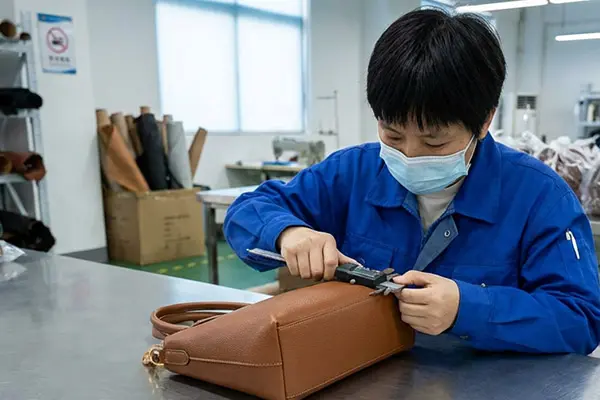
3. Heavy-Duty Sewing Tech: We use bonded nylon thread with double-needle lockstitches. Critical stress points—such as the loop surrounding the D-rings—are secured with cross-stitching and metal rivets for long-term safety.
4. Localized Demand Dynamics: The European Standard
Sourcing for the French or broader European pet retail market requires strict compliance with safety and chemical standards. The EU REACH regulation restricts the use of heavy metals, azo dyes, and specific phthalates in pet accessories, since pets chew on their harnesses. Our factories implement strict raw material screening to ensure every batch of leather meets REACH and California Proposition 65 limits.
Furthermore, European buyers favor minimal, elegant branding—such as blind debossing—paired with traditional brass or antique-silver hardware finishes. By utilizing our low MOQ (100 pieces) OEM service, brands can run localized test markets for specific sizing ratios, catering to popular city breeds like French Bulldogs, Spaniels, and Pointers.