
Who Is the Top Leather Product Manufacturer in China?

Time:2026-11-11 Author:Ethan
0%

Choosing the top Leather Product Manufacturer in China takes more than comparing prices or browsing polished catalogues. A supplier’s real strengths appear in the details: consistent stitching, clean edge finishing, dependable hardware, and samples that match the final order. Ask how leather is sourced, how defects are handled, and whether production checks are documented. Specific answers matter. So do clear records.

Leather industry consultant Mike Redwood offers a useful standard: “A manufacturer earns trust through consistent quality, clear sourcing, and honest communication.” That idea is practical, though it should be tested against evidence. Request recent product samples, inspect seams and lining, and compare specifications with the production sample. A confident sales pitch is not proof. Even a strong factory can make mistakes.

This guide examines how to assess Chinese manufacturers by product capability, material choices, quality control, communication, and production scale. It also considers what buyers can verify before placing an order, from sample approval to packaging details. No single company will suit every brand. A small workshop may offer flexibility, while a larger facility may handle repeat volumes more smoothly. The best choice depends on the product, budget, and required consistency. Ask precise questions. Keep the answers. That small habit can reveal more than a glossy brochure.
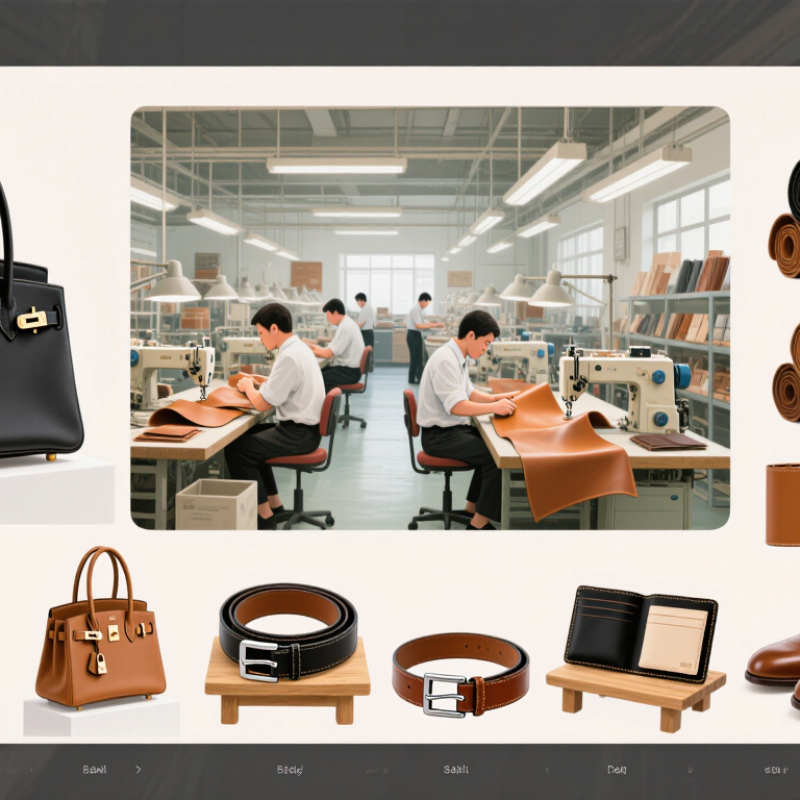
Who Is the Top Leather Product Manufacturer in China?

What “Top Leather Product Manufacturer” Means

Who Is the Top Leather Product Manufacturer in China?

What “Top Leather Product Manufacturer” Means

“Top” should describe proven performance, not factory size alone. The WTO’s World Trade Statistical Review 2023 reports that China exported US$3.59 trillion in goods in 2022, or 14.4% of global merchandise exports. That scale shows the depth of China’s manufacturing base. It does not prove that any individual leather-goods factory delivers consistent quality.

A useful comparison starts with the product itself. Ask for production samples, material specifications, inspection records, and batch traceability. Check whether leather thickness, color, stitching, and edge finishing remain consistent across repeated orders. Request evidence of process controls and clear defect-handling procedures. Small details matter. A smooth zipper can hide uneven seams.

The World Footwear Yearbook 2023 estimates that China produced about 13.1 billion pairs of shoes in 2022, but footwear output is only context, not a ranking of leather-product makers.

A strong manufacturer can explain its sourcing, capacity, lead times, and quality checks with records rather than broad promises. Independent audits and repeat-order results add useful evidence. Still, one factory visit cannot reveal every production issue, and a polished sample may not match a full batch. That limitation deserves attention. Buyers should compare like-for-like products and verify claims against actual order data.

How China’s Leather Goods Industry Is Organized

China’s leather goods industry is not one giant factory. It is a network of workshops, material suppliers, component makers, and export-oriented manufacturers. Some factories cut and stitch bags; others specialize in wallets, belts, linings, or metal fittings. This division lets buyers match a product’s needs with a suitable production team.

Regional clusters help connect these businesses. In places such as Guangdong, Zhejiang, and Hebei, manufacturers may work near suppliers of fabrics, hardware, packaging, and production services. Proximity can shorten sampling and make small adjustments easier. A buyer might review a stitched sample, change the pocket depth, and discuss the new specification with the factory team. Details matter.

Manufacturers also differ in how much they handle in-house. One may manage pattern development, cutting, sewing, inspection, and packing. Another may coordinate several specialist suppliers. The second model can offer flexibility, but it makes communication and quality checks more important. A cluster is not a quality guarantee. The map can mislead. Buyers should assess a factory’s actual product experience, sample consistency, material traceability, and inspection process. Even a clear checklist cannot replace a careful conversation about how defects are recorded and corrected.

Who Is the Top Leather Product Manufacturer in China? — How China’s Leather Goods Industry Is Organized

There is no single “top” manufacturer for every leather product category. China’s industry is organized into regional production clusters and specialized supply-chain stages, so the best-fit supplier depends on the product, materials, production capability, and compliance requirements.

Industry segment Typical activities Examples of regional clusters What buyers should assess
Leather and material processing Tanning, finishing, coloring, and preparation of leather materials; synthetic and other alternative materials are also used in goods production. Haining in Zhejiang is associated with leather-related products and materials. Processing locations and capabilities vary by material and product. Material composition, restricted-substance testing, traceability, environmental controls, and consistency between approved samples and production lots.
Bags and leather goods Pattern development, cutting, stitching, assembly, hardware fitting, finishing, and packaging for handbags, wallets, belts, and related goods. Shiling in Huadu District, Guangzhou, Guangdong, is a well-known leather goods and bag-making cluster. Baigou in Hebei is a major bags and luggage production and wholesale center. Product-specific workmanship, sample development, leather or fabric sourcing, hardware quality, order flexibility, and inspection arrangements.
Footwear and leather-related products Shoe design and assembly, cutting and stitching of uppers, sole attachment, finishing, and production of related components. Wenzhou in Zhejiang and Jinjiang in Fujian are widely recognized footwear manufacturing centers; their wider supplier networks include materials and components. Construction method, fit and sizing control, material durability, production capacity, testing needs, and the supplier’s experience with the intended footwear category.
Components and subcontracting Manufacture of zippers, buckles, handles, linings, soles, and other components; specialist workshops may handle particular production steps. Component suppliers are often located near larger footwear, bag, and leather goods clusters, although sourcing networks can cross provincial boundaries. Subcontractor disclosure, component specifications, change control, delivery coordination, and responsibility for final-product quality.
OEM and ODM production OEM suppliers manufacture to a buyer’s design or specification. ODM suppliers typically contribute design or product-development services as well as manufacturing. Both models are found across China’s regional production clusters; the service offered depends on the individual factory and order. Confirm design ownership, tooling and sample charges, minimum order quantities, lead times, quality procedures, and export documentation in writing.
How to identify the best-fit manufacturer Match the supplier’s demonstrated production experience and supply chain to the specific product rather than relying on a general “top manufacturer” ranking. Use regional clusters as starting points for sourcing, not as guarantees of a particular factory’s quality or capability. Review relevant product samples, factory and quality records, material documentation, capacity, audit needs, communication, and a clearly defined inspection plan.

Regional examples indicate commonly recognized industry specializations; they are not exhaustive, and the capabilities of individual suppliers should be verified independently.

Key Criteria for Evaluating Manufacturers

A strong leather goods manufacturer should match the product, order size, and quality expectations. Ask what leather types are available and how materials are tracked. Clear records help buyers understand origin, grading, and consistency between batches. Feel the leather sample, inspect its edges, and check stitching around corners and handles. Small flaws often appear there first.

Samples matter. A polished prototype does not prove that every production unit will match. Request a pre-production sample and written inspection standards. Ask how staff check dimensions, color variation, seams, hardware, and packaging. Ask for proof. Useful evidence may include inspection reports, material specifications, and documented corrective actions. No checklist is perfect. A factory visit or independent inspection can reveal details that photographs miss, though access may not always be practical.

Production capacity deserves careful review. Confirm realistic lead times, minimum quantities, and how delays are communicated. Ask who handles quality questions and how quickly they respond. A detailed answer is more useful than a broad promise. Compare quotes by checking what they include, such as sampling, packaging, testing, and shipping preparation. Low prices can reflect different materials or inspection levels, so clarify the details before comparing. Even a careful evaluation has limits; early orders may reveal issues that samples cannot show.

How to Verify a Manufacturer’s Capabilities

Who Is the Top Leather Product Manufacturer in China?

How to Verify a Manufacturer’s Capabilities

A supplier’s brochure may show a polished workshop, but photos rarely reveal daily production control. Request a live video walkthrough or visit the factory. Check how incoming leather, linings, hardware, and finished goods are stored. Ask who inspects material thickness, color consistency, stitching, and edge finishing. Small details matter. A neat sample proves possibility, not repeatability.

Compare a pre-production sample with several items from a recent batch. Inspect seam spacing, handle attachment, zipper movement, and color under natural light. Request inspection records, defect classifications, rework rates, and the process for approving materials. Numbers need context. A low defect rate means little if rejected pieces are excluded. Ask how figures are calculated, then check whether records match what you see on the production floor.

Test capacity claims against actual schedules. Ask how many production lines make similar goods, what happens during peak season, and which operations are outsourced. Confirm who owns each quality checkpoint and how changes are documented. A small paid trial order can test agreed tolerances and packaging details. It may feel slow. Still, rushing verification can cost more than a delayed launch. No audit catches everything, so revisit assumptions if samples and production differ.

Choosing a Manufacturer for Your Product Needs

Choosing a leather product manufacturer in China should begin with your product, not a ranking. A wallet, belt, and structured bag require different cutting, stitching, and edge-finishing skills. Share a clear specification, including dimensions, leather type, lining, hardware, and expected order quantity. Then request a sample made to those details. Small details matter. Check stitch spacing, pocket alignment, edge paint, and how the item feels when opened and closed.

A polished sample is useful, but it does not prove every production unit will match. Ask how materials are inspected, how defects are recorded, and who checks goods before shipment. Ask for evidence. Written inspection steps and dated production photos can make discussions more concrete. Confirm sample charges, lead times, minimum quantities, packaging, and what happens if an order misses agreed specifications. Compare quotes carefully; a lower price may reflect thinner material or fewer quality checks. It can be hard to spot the difference from a brief email.

Communication deserves equal attention. Send one real design change and see whether the manufacturer explains its cost and schedule clearly. No checklist removes every risk, and a small trial order may still reveal issues. That is a reason to plan carefully, not to expect perfection. Keep approved samples and specifications available for comparison during production.

FAQS

What should I check before choosing a leather goods manufacturer?

Match its skills to your product, order size, and quality needs. Ask about leather types, material records, and batch consistency.

How can I judge a leather sample?

Check the edges, corner stitching, handles, and finish. Small flaws show. Open and close the item to assess its feel and function.

Does a polished sample guarantee consistent production?

No. Request a pre-production sample and written inspection standards. Compare it with several items from a recent batch.

What evidence can help verify quality controls?

Request inspection reports, material specifications, defect records, and documented corrective actions. Ask how defect rates are calculated.

How can I check a factory’s daily production practices?

Request a live walkthrough or visit when practical. Look at how leather, linings, hardware, and finished goods are stored.

What production details should I confirm?

Ask about realistic lead times, minimum quantities, production lines, and peak-season plans. Clarify which operations are outsourced.

How should I compare manufacturer quotes?

Check whether sampling, packaging, testing, and shipping preparation are included. A lower price may mean different materials or fewer inspections.

Can a small trial order reduce uncertainty?

It can test agreed tolerances, packaging, and communication. It may still reveal problems that samples missed.

How can I assess communication before ordering?

Send a real design change. See whether the manufacturer explains its cost and schedule clearly. One reply is not the whole picture.

What should I keep during production?

Keep approved samples and specifications available for comparison. No checklist catches everything, so revisit assumptions when products differ.

Conclusion

Choosing the top Leather Product Manufacturer in China depends on more than production scale or price. The term “top” should reflect a manufacturer’s ability to meet a product’s specific requirements consistently, from material selection and workmanship to communication and delivery planning. China’s leather goods industry includes factories and workshops with different specializations, capacities, and levels of customization, so the right choice will vary by product type and order needs.

A careful evaluation should consider relevant experience, sample quality, production capacity, quality-control procedures, material sourcing, and responsiveness. Before making a decision, verify these capabilities through clear documentation, detailed discussions, and sample orders where appropriate. Compare potential manufacturers against your own priorities, such as design complexity, order volume, budget, and expected timelines. By assessing evidence rather than relying on broad claims, you can identify a suitable production partner and build a clearer understanding of what the manufacturer can deliver.

Ethan

Ethan

Ethan is a seasoned marketing professional with a deep expertise in our company's innovative product line. With a passion for sharing knowledge and insights, he takes the lead in regularly updating our corporate blog, where he explores industry trends, product features, and effective marketing......