
How to Find a Top Leather Goods Manufacturer in China?

Time:2026-11-04 Author:Sienna
0%

Choosing a Leather Goods Manufacturer in China involves more than comparing prices or browsing polished product photos. A supplier may show a smooth leather wallet, yet the edge paint, lining, or stitching can reveal more about daily production quality. Small details matter. This guide explains how to assess a factory’s capabilities, communication, and quality controls before placing an order.

A useful evaluation starts with the product itself. Ask which leather grades are available, how color and texture are checked, and whether hardware can be sourced consistently. Request a sample made to your specifications, then inspect the seams, zipper movement, pocket alignment, and finish under ordinary use. Clarify minimum order quantities, sample fees, lead times, and what happens when approved materials are unavailable. These questions help separate a good sales presentation from a workable production relationship.

There is no perfect checklist. A convincing sample may not represent every unit in a large run, and a factory visit alone cannot guarantee consistent results. Look for clear answers, documented inspection steps, and realistic timelines. If possible, confirm details in writing and agree on acceptable tolerances before production begins. The aim is not to find the cheapest supplier, but one whose skills and process fit your design, order size, and quality expectations. A few careful checks can prevent avoidable surprises—though some uncertainty remains.
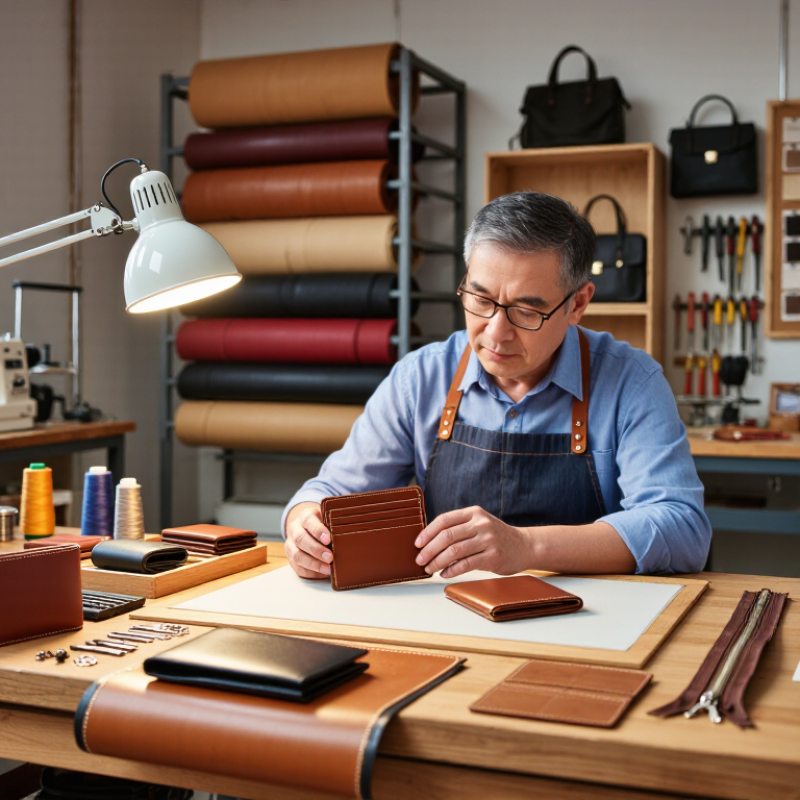
How to Find a Top Leather Goods Manufacturer in China?

Define Your Leather Goods Requirements and Production Specifications

Before contacting a leather goods manufacturer in China, turn your idea into a practical product brief. Name the item, intended use, target customer, and expected order quantity. “A small everyday crossbody bag” is not enough. Add dimensions, strap length, pocket placement, and approximate weight. Measure a reference item if you have one. Small details matter.

Specify the leather by type, thickness, texture, and color reference. Include photographs in natural light, but do not rely on photos alone; color can shift between screens and material batches. Note edge treatment, stitching color, lining, zipper type, metal finish, and logo placement. Describe packaging too, such as a dust bag or recyclable carton. Be precise, but leave room for a workable production suggestion.

Set measurable tolerances for dimensions and acceptable cosmetic variation, especially around grain, edges, and seams. Ask for a sample made from the proposed materials before approving bulk production. Record what must match and what may vary. A first sample may expose flaws in your own brief. That can be frustrating. Revise the specification, confirm the sample version, inspection points, delivery schedule, and payment milestones in writing. If a feature is still undecided, say so rather than letting the factory guess.

Identify Suitable Manufacturing Regions and Supplier Types in China

China’s leather-goods suppliers cluster around different strengths. Shiling in Guangzhou’s Huadu District is known for bags and small leather accessories; Wenzhou has a long-established leather-goods and footwear base, while Quanzhou is particularly strong in footwear.

World Footwear Yearbook 2024 estimates China produced about 12.3 billion pairs of shoes in 2023, roughly 55% of global output. This points to a deep footwear supply chain, not a guaranteed supply of skilled bag makers. Important distinction.

Supplier types range from full-package OEM factories to specialist workshops and trading companies. OEM suppliers can manage patterns, materials, sampling, and production; workshops may suit smaller runs or detailed hand-finishing. Trading companies can coordinate vendors, but add a layer between buyer and factory.

Ask where cutting, stitching, and final inspection happen. Request a sample made with the intended leather, edge paint, and hardware, then check seams and handle attachment in person or through a documented inspection.

Tips: Match the region to the product, not just the quoted price. Confirm the actual production site, sample lead time, and monthly capacity before placing an order. A polished showroom proves little.

Verify Manufacturer Credentials, Experience, and Production Capacity

A strong leather goods manufacturer should prove its claims with records and a factory visit, not a polished sample alone. Check its Chinese business registration, registered address, export history, and any current quality or environmental certificates. Confirm that certificate names and addresses match the actual production site. Ask who owns each process, from cutting and stitching to edge finishing and final inspection. Small mismatches matter.

The World Footwear Yearbook 2024 estimates that global footwear production reached 22.4 billion pairs in 2023. This is footwear data, not a direct measure of leather goods capacity, but it shows the scale of the wider manufacturing supply chain. Ask suppliers for monthly output by product type, current machine use, worker shifts, and peak-season lead times. Then compare those figures with your order size. Request dated production photos or arrange a live video walkthrough. Look closely at cutting tables, stitching lines, material storage, and finished-goods inspection records.

I would also request two or three recent customer references, with permission, and verify them independently. A sample may be excellent while the production line struggles to repeat it. Test a pilot order before committing to larger volumes. Still, no checklist is perfect. I may be overly cautious, but a delayed or incomplete answer about subcontracting deserves another question. The OECD’s Due Diligence Guidance for Responsible Supply Chains in the Garment and Footwear Sector recommends identifying and addressing supply-chain risks; use that principle to map which processes happen on site and which do not.

How to Find a Top Leather Goods Manufacturer in China

Use this checklist to verify a manufacturer’s credentials, experience, and production capacity. The bars count evidence types to request in each area; they are not industry benchmarks or manufacturer ratings.

What to check: Credentials—business license, relevant certifications, and audit records. Experience—product portfolio, client references, and sample quality. Production capacity—equipment and workforce, stated output, lead times, and quality-control procedures. Verify documents and claims directly, and confirm certifications are relevant to your product and market.

Assess Material Quality, Samples, and Compliance Standards

A reliable leather goods manufacturer should explain exactly what goes into each product. Ask about leather type, thickness, finish, and how hides are sorted. Then inspect a sample in daylight. Look for uneven color, loose fibers, rough edges, and stitching that wanders near corners. Flex the leather gently and check whether the surface cracks or feels coated. Small flaws matter. A sample can look excellent while concealing inconsistent material sourcing, so ask how the factory controls quality across a full production run.

Tips: Request samples made with the same leather, lining, hardware, and construction planned for your order. Compare several pieces, not just the best one. Ask for written material specifications and recent test reports, and confirm what each report covers. Keep a signed sample for later comparison. This step feels fussy, but it can prevent expensive misunderstandings.

Check whether the supplier can provide traceable material records and explain its inspection process. Compliance requirements vary by destination and product, so identify the standards that apply to your market. Ask who conducts testing, when it was performed, and whether the tested material matches your proposed order. Verify documents with the issuing laboratory when practical. I sometimes find a neat certificate reassuring too quickly; it is only useful when its scope, date, and product details line up. A clear answer matters, but so does evidence.

How to Find a Top Leather Goods Manufacturer in China? - Assess Material Quality, Samples, and Compliance Standards
Assessment Area What to Check Evidence to Request Practical Evaluation Decision Signal
Leather type and specification Confirm whether the material is full-grain, corrected-grain, split leather, suede, or a non-leather alternative. Clarify finish, thickness, color, and any lining or backing. Written material specification, supplier declaration, and traceable material or batch information where available. Compare the specification with the intended product and inspect the hide surface, edges, color consistency, and natural variation. The material description is specific and consistent across the quote, sample, and production documentation.
Physical leather performance Assess tensile strength, tear strength, thickness, and finish durability against the product’s expected use. Recent test reports identifying the tested material, method, result, and laboratory. Relevant methods include ISO 3376 for tensile strength and ISO 3377-2 for tear load. Set acceptance limits for the specific item with the manufacturer; there is no single universal strength threshold suitable for every leather product. Results relate to the proposed material and meet the agreed product specification.
Color and surface finish Check color uniformity, coating adhesion, resistance to rubbing, and visible finish defects. Color and finish standards approved in writing, plus applicable test results such as ISO 11640 for color fastness to rubbing. Inspect representative areas under consistent lighting and compare dry and wet rubbing performance with agreed acceptance criteria. The supplier can explain acceptable natural variation and has a documented process for controlling avoidable defects.
Pre-production samples Review a sample made with the intended leather, lining, thread, hardware, construction, and packaging—not substitute materials. A signed or otherwise clearly identified approval sample, bill of materials, dimensions, color references, and a record of approved changes. Check dimensions, stitching, edge finishing, closures, hardware operation, stress points, and appearance after repeated normal use. The manufacturer can reproduce the approved sample and agrees to obtain approval before changing critical materials or construction.
Chemical and market compliance Identify requirements for the destination market, product type, and intended contact. Check restricted substances relevant to leather and any additional product rules. Test reports from a competent laboratory, material declarations, and a compliance plan tied to the actual product and destination. Relevant methods can include ISO 17075 for chromium(VI) in leather and ISO 17226 for formaldehyde determination. For EU market assessment, verify applicable REACH restrictions; the chromium(VI) limit in leather articles or leather parts in contact with skin is 3 mg/kg under the relevant restriction. Reports match the proposed materials and applicable market rules; confirm current requirements rather than relying on a generic “compliant” claim.
Production quality control Understand incoming-material checks, in-process inspections, final inspection, and how defects or rework are recorded. Inspection checklist, defect classification, sample inspection records, and a documented corrective-action process. Ask how the factory maintains consistency across batches and whether pre-shipment inspection can be arranged against agreed criteria. Controls are documented, responsibilities are clear, and problems are investigated rather than handled only through informal promises.
Supplier verification and records Confirm the manufacturing site, production capabilities, subcontracting arrangements, and ownership of product specifications and tooling. Business and facility documentation, a production-site review, written subcontracting disclosure, and clear commercial and quality terms. Discuss capacity, lead times, minimum order quantities, sample charges, change control, and how production records are retained. Capabilities and records are verifiable, and the supplier provides direct, consistent answers to technical questions.
Note: Test methods and regulatory limits depend on the product, material, intended use, and destination market. Agree product-specific acceptance criteria and verify current legal requirements before production.

Compare Quotations, Terms, and Communication Before Choosing a Partner

A low unit price can hide costs that appear later.

Ask each leather goods manufacturer for a quotation based on the same product brief, quantity, and material specification. Include leather type and thickness, lining, hardware, edge finishing, packaging, and logo application. Otherwise, you may be comparing different products.

Request separate figures for sampling, tooling, and bulk production. Ask whether shipping is included, how long the quotation remains valid, and what could change the final price.

Small details matter. A sample made with premium leather may not match a bulk order using a lower grade.

Request material photos or swatches, but treat them as a reference, not proof of consistency.

Read the terms carefully before paying a deposit. Confirm the minimum order quantity, sample timeline, production lead time, payment milestones, and process for handling defects. Put agreed specifications in writing.

Also notice how the supplier communicates. Do replies answer your questions clearly, or only promise that everything is fine? Try one focused follow-up and see whether the response includes dates, measurements, or next steps.

A polished sales message is not the same as reliable production control.

And sometimes, a buyer’s own brief is too vague; that can cause avoidable delays.

FAQS

What should I check when inspecting a leather sample?

Inspect it in daylight. Look for uneven color, loose fibers, rough edges, and wandering stitches near corners. Gently flex the leather and check for cracks or a coated feel.

Should a sample use the same materials as the full order?

Yes. Request the planned leather, lining, hardware, and construction. Compare several pieces, not only the best-looking one. Small flaws matter.

How can I check material consistency across production?

Ask how hides are sorted and quality is controlled during a full run. Request written material specifications and keep a signed sample for comparison.

What should I look for in test reports and certificates?

Check the report’s date, scope, tested material, and product details. Ask who performed the testing. I can feel reassured too quickly by a neat certificate; details matter more.

How can I compare supplier quotations fairly?

Give each supplier the same product brief, quantity, and material specifications. Include leather thickness, lining, hardware, edge finishing, packaging, and logo application.

What costs should a quotation show separately?

Request separate prices for sampling, tooling, and bulk production. Confirm whether shipping is included, how long the quote stays valid, and what could change the price. Swatches help, but they are not proof.

Which terms should I confirm before paying a deposit?

Confirm the minimum order quantity, sample timeline, production lead time, payment milestones, and defect-handling process. Put agreed specifications in writing.

How can I tell whether communication is reliable?

Ask one focused follow-up. Look for dates, measurements, or clear next steps, not only reassurance. A vague buyer brief can cause delays too.

Conclusion

Finding a reliable Leather Goods Manufacturer in China begins with clearly defining your product requirements. Specify the types of goods, dimensions, design details, materials, color options, expected order quantities, and production timelines. Then research manufacturing regions and supplier types that fit your needs, considering whether a factory, specialized workshop, or trading partner is the best match for your project.

Before making a decision, verify each manufacturer’s experience, credentials, equipment, workforce, and capacity to meet your order schedule. Review material quality and request samples to assess construction, finish, and consistency. Check that the supplier can meet relevant quality and product compliance requirements for your target market. Finally, compare detailed quotations, minimum order quantities, payment and delivery terms, sample fees, and communication practices. A careful evaluation of these factors helps you select a capable partner and establish clear expectations for production.

Sienna

Sienna

Sienna is a skilled marketing professional with a deep expertise in our company’s core products and services. With a passion for innovation and detail, she plays a pivotal role in crafting insightful blog posts that not only highlight the unique features of our offerings but also provide valuable......